
Lower Rates, Weaker Dollars, Smarter Moves
When the Fed Prints, Assets Win and Debt Structure Becomes the Edge
Money is getting easier again.
Interest rates are coming down.
Liquidity is expanding.
And the dollar is quietly losing purchasing power — the way it always does when more of it gets created.
This isn’t drama.
It’s how the system works.
What Just Changed
Starting Friday, 12.12.25, the Federal Reserve resumed daily liquidity injections — roughly $43 million per day entering the financial system through various programs.
This isn’t about headlines.
It’s about mechanics.
When the Fed prints, dollars multiply.
When dollars multiply, each one buys a little less.
Why Lower Interest Rates Matter
Lower rates aren’t designed to help consumers.
They exist to:
Reduce pressure on debt
Encourage borrowing
Support asset values
For operators who understand leverage, this is not a warning sign.
It’s a window.
Cheaper money changes behavior — and it rewards people who own assets financed with long-term, fixed debt.
Cash Feels Safe — Until It Isn’t
Cash doesn’t fluctuate, which makes people comfortable.
But in periods of monetary expansion, cash is the only asset guaranteed to lose value in real terms.
You don’t see it immediately.
You feel it later — in higher costs, higher rents, higher replacement prices.
Comfort is expensive.
Why Cash Underperforms in This Cycle
Cash feels stable, but in an expanding money supply:
Purchasing power erodes
Prices adjust upward
Holding cash becomes a hidden cost
Stability is not the same as preservation.
Why Assets Hold Up Better
Real assets adjust with inflation:
Replacement costs rise
Values recalibrate
Income potential increases
Debt stays fixed.
Assets move.
That spread is the advantage.
Why Loan Structure Matters More Than Rate
Most people focus on interest rate.
Experienced operators focus on structure.
Small changes in amortization dramatically change monthly obligations — even when rates are nearly identical.
Same asset. Same price. Different cash position.
This Is Where Financing Strategy Comes In
This is exactly why banks that understand owner-occupied businesses are stepping up right now.
First Citizens has rolled out a targeted owner-occupied financing structure designed to give borrowers flexibility in a changing rate environment — without chasing teaser rates or risky terms.
Instead of one rigid loan, they’re offering three structured amortization paths under the same program.
The First Citizens Owner-Occupied Special
Under this First Citizens structure, borrowers choose how aggressive or conservative they want to be — while staying in the same rate environment.
Assumptions:
Owner-occupied (51%+)
5-year fixed term
~15% down
Option 1 — 15-Year Amortization
Approx. 4.99%
Higher monthly payment
Faster equity build
Best for:
Strong cash flow, balance-sheet driven operators.
Option 2 — 20-Year Amortization
Approx. 5.04%
Balanced payment structure
Steady equity growth
Best for:
Operators who want predictability without constraining operations.
Option 3 — 25-Year Amortization
Approx. 5.09%
Lowest monthly payment
Maximum cash preservation
Best for:
Growth-focused businesses prioritizing flexibility and control.
Same loan program.
Same lender.
Very different cash outcomes.
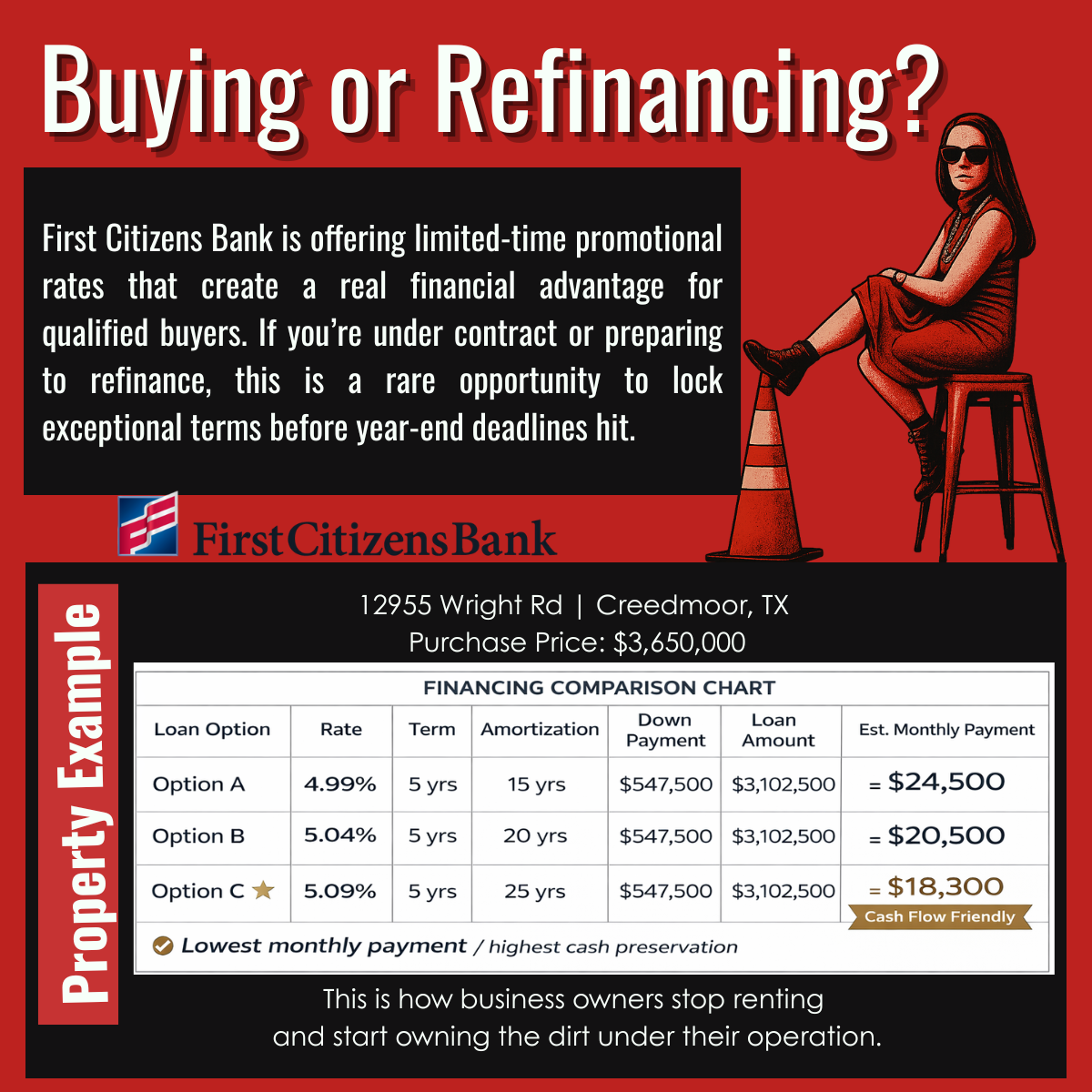
How This Plays Out in the Real World
When applied to real owner-occupied properties — like 12955 Wright Rd in Creedmoor, Texas — the difference between these options can mean thousands of dollars per month in operating cash.
That cash difference impacts:
Hiring
Equipment
Growth
Stability
This is why structure matters more than rate.
Bottom Line
When:
Rates soften
Liquidity expands
The dollar weakens over time
Assets tend to outperform cash — especially when paired with smart, flexible debt.
The First Citizens owner-occupied structure is a clear example of how lenders and borrowers can align in this phase of the cycle.
This isn’t about timing the market.
It’s about positioning correctly when the rules of money shift.
REAL-WORLD EXAMPLES — PROPERTIES CURRENTLY AVAILABLE
Understanding money cycles and loan structure matters — but execution still happens at the property level.
These are two owner-user–friendly assets currently available that align well with today’s financing environment.
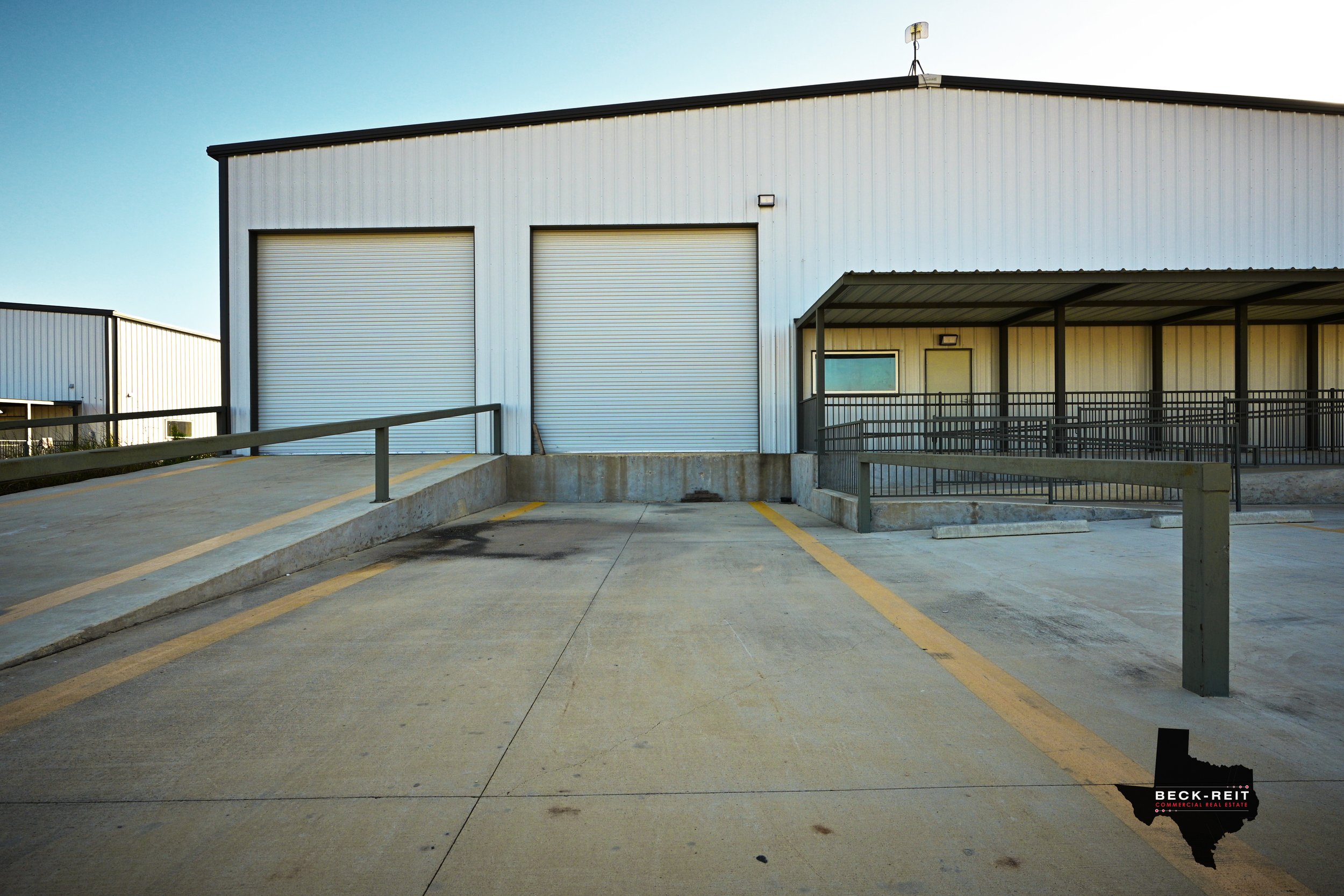
12955 Wright Rd | Creedmoor, TX
Owner-User Industrial / Flex Opportunity
This property is a strong example of how owner-occupied financing can be applied in the real world.
Why it works:
Built for operational businesses
SBA-eligible (owner-occupied)
Flexible loan structures available (Conventional, SBA 7(a), SBA 504)
Opportunity to control long-term occupancy and costs
This asset illustrates how loan structure — not just interest rate — changes the economics of ownership.
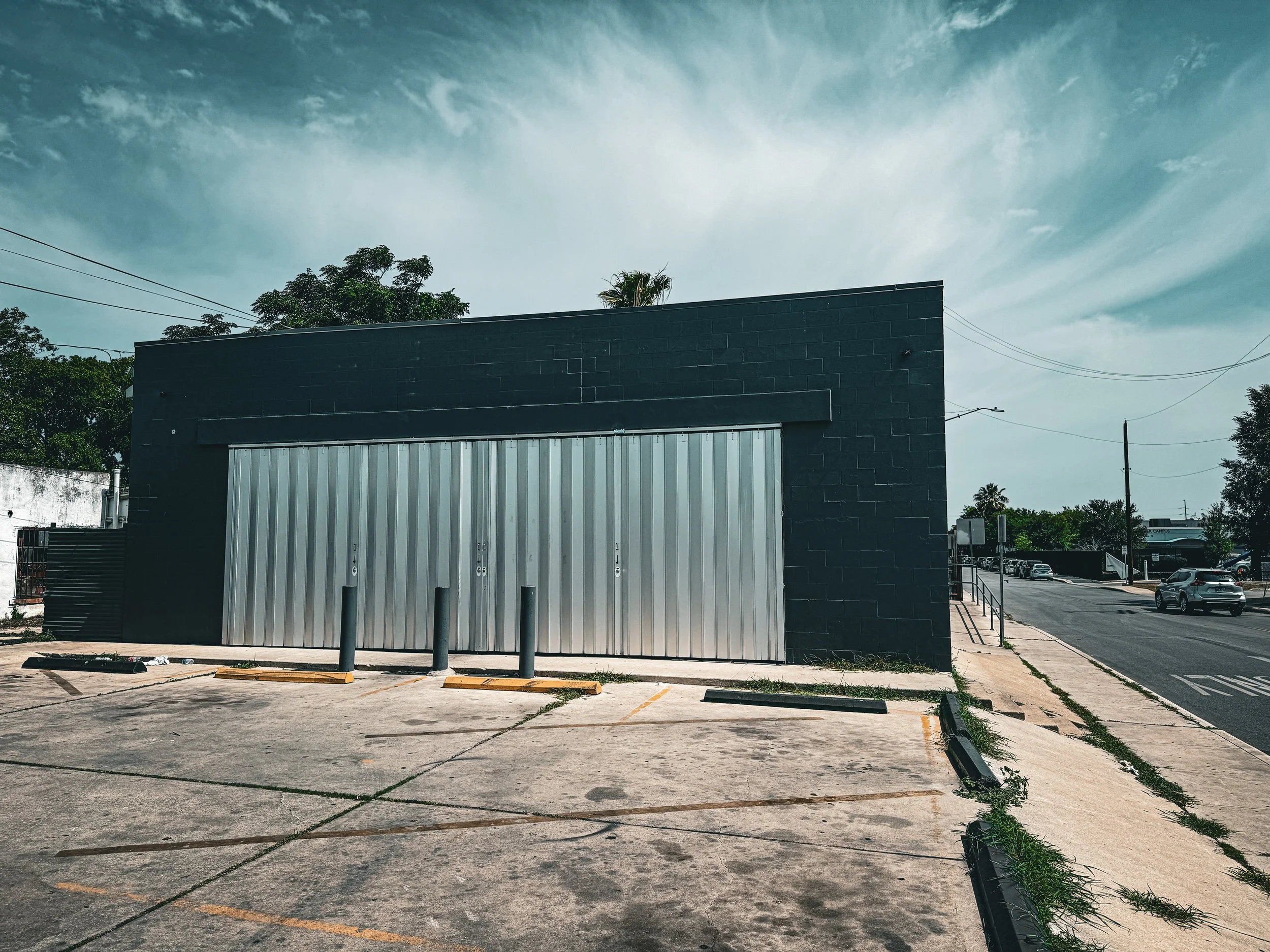
4403 W Commerce St | San Antonio, TX
Owner-User / Investment Commercial Property
This property offers flexibility for:
Owner-users
Hybrid owner-user / investment reminders
Businesses looking for long-term positioning in an urban corridor
Why it matters:
Strong location fundamentals
Adaptable use profile
Opportunity to combine operations with future upside
This is the type of asset that performs well when capital gets cheaper and replacement costs continue to rise.